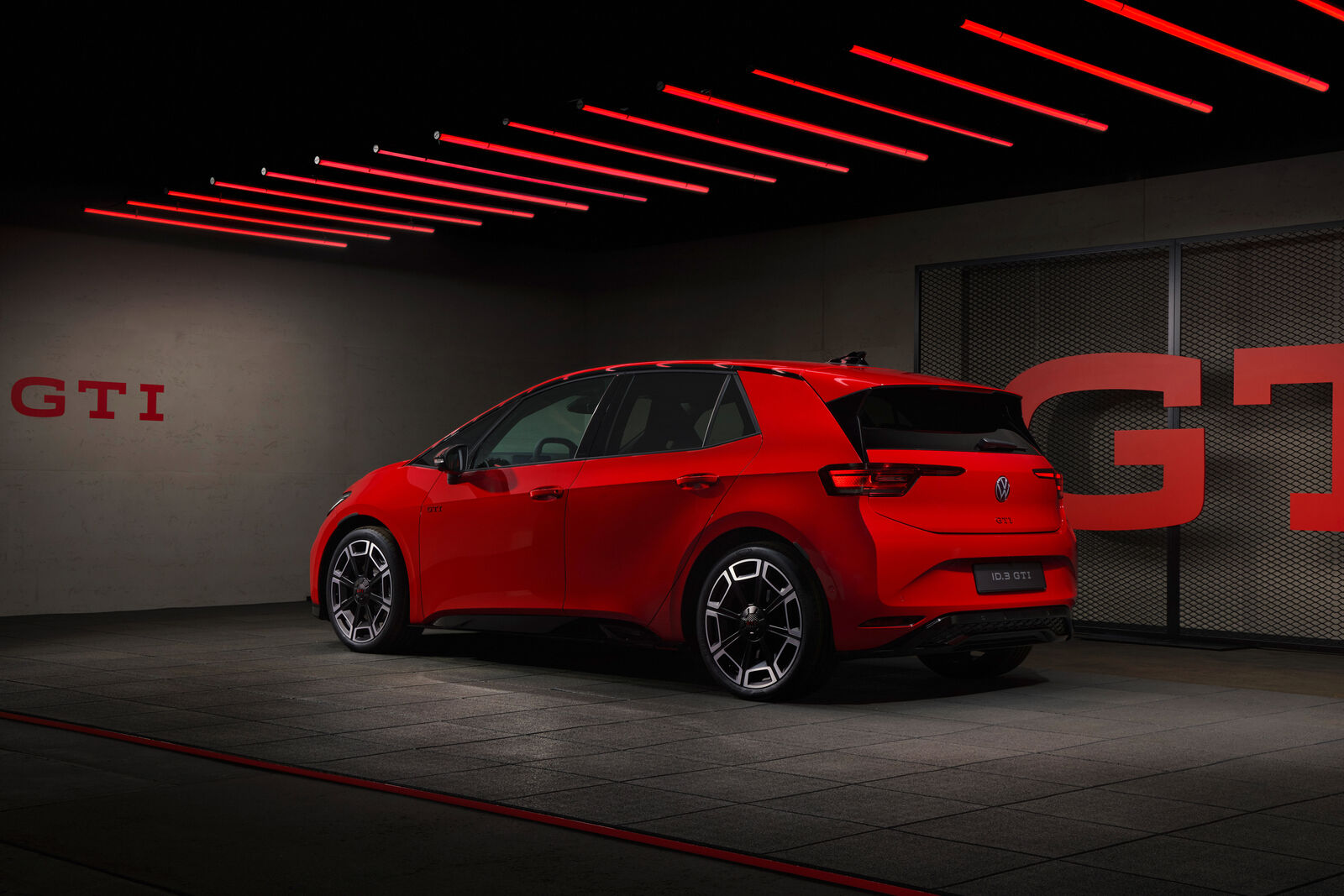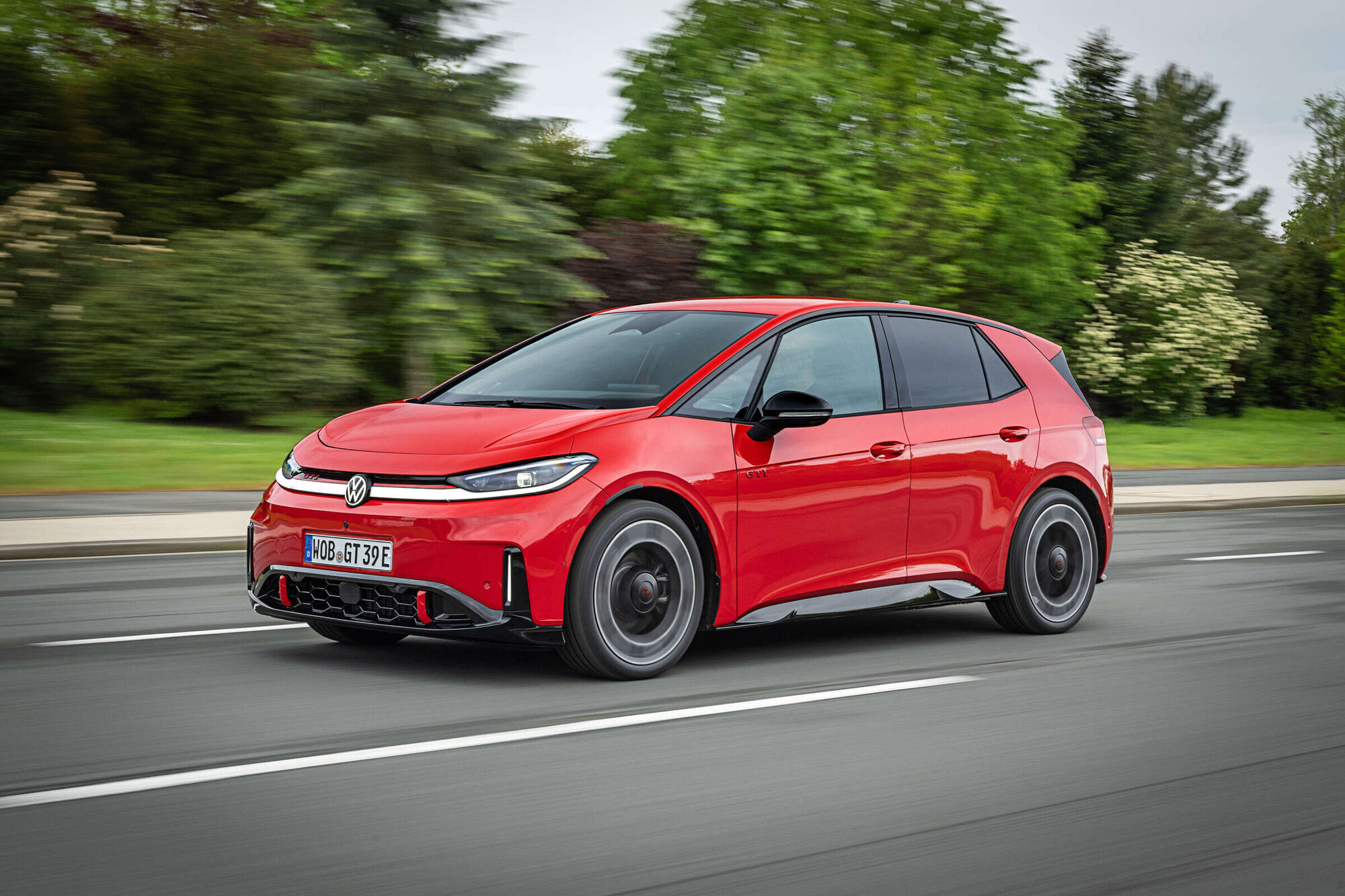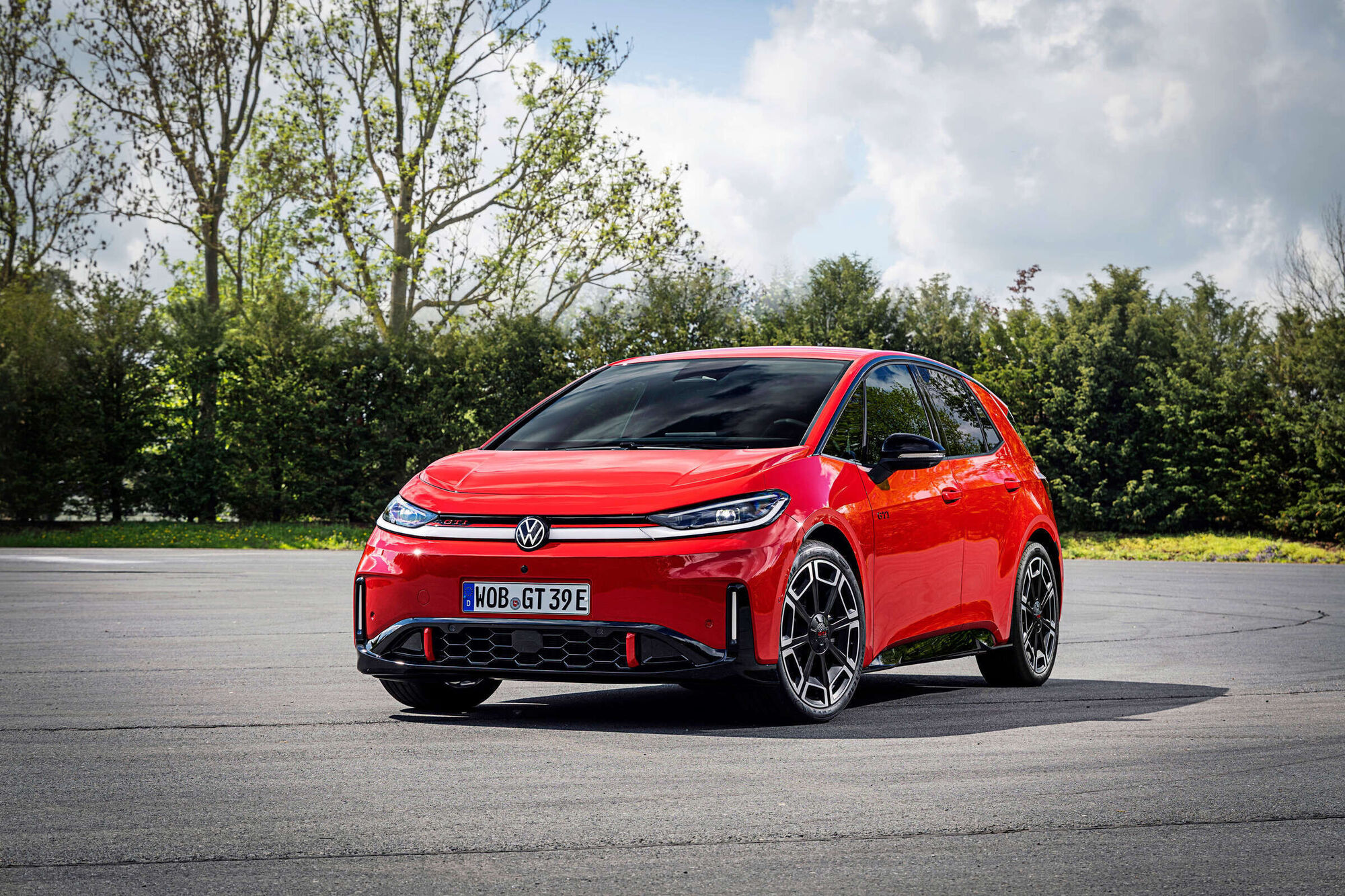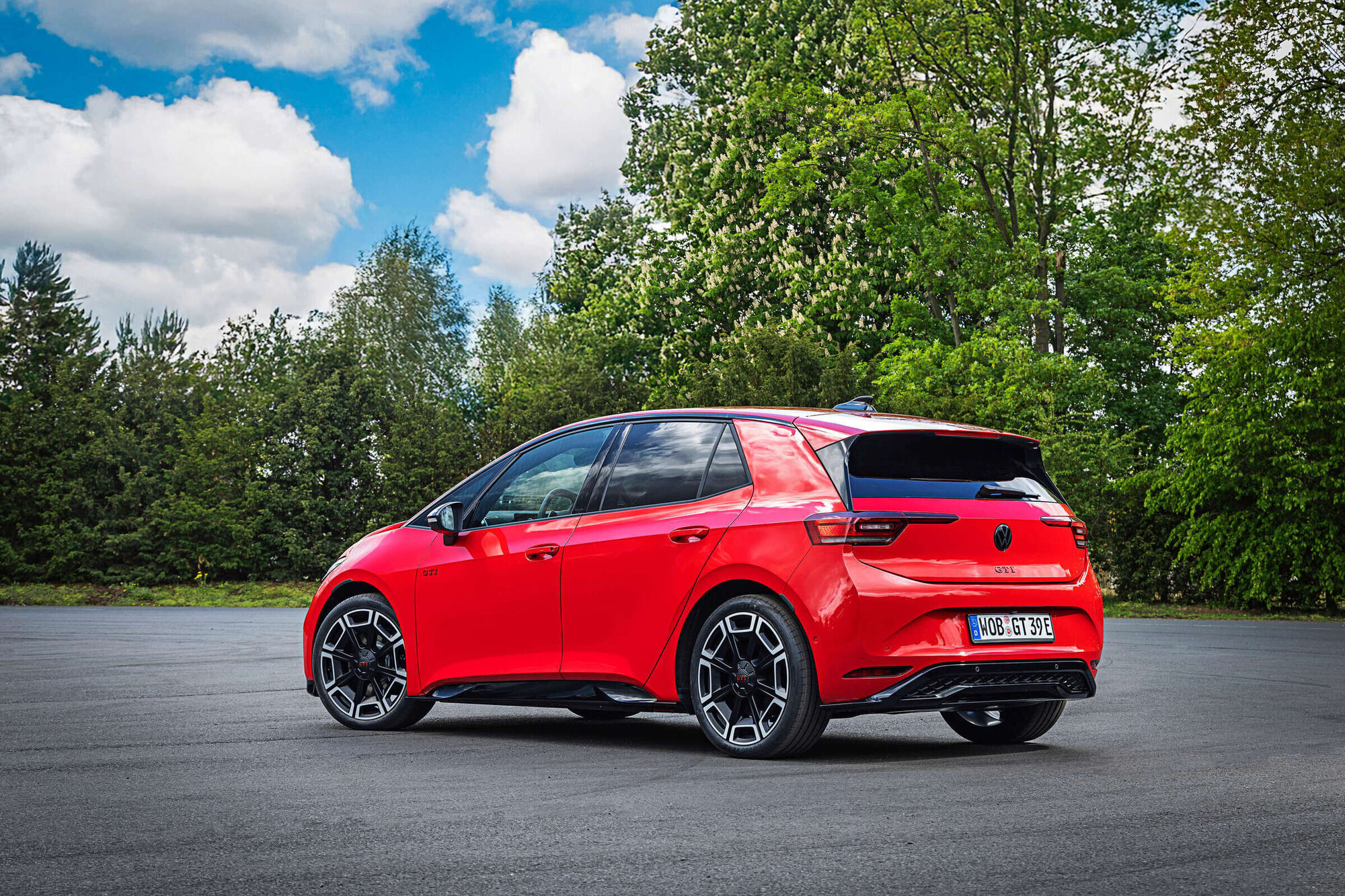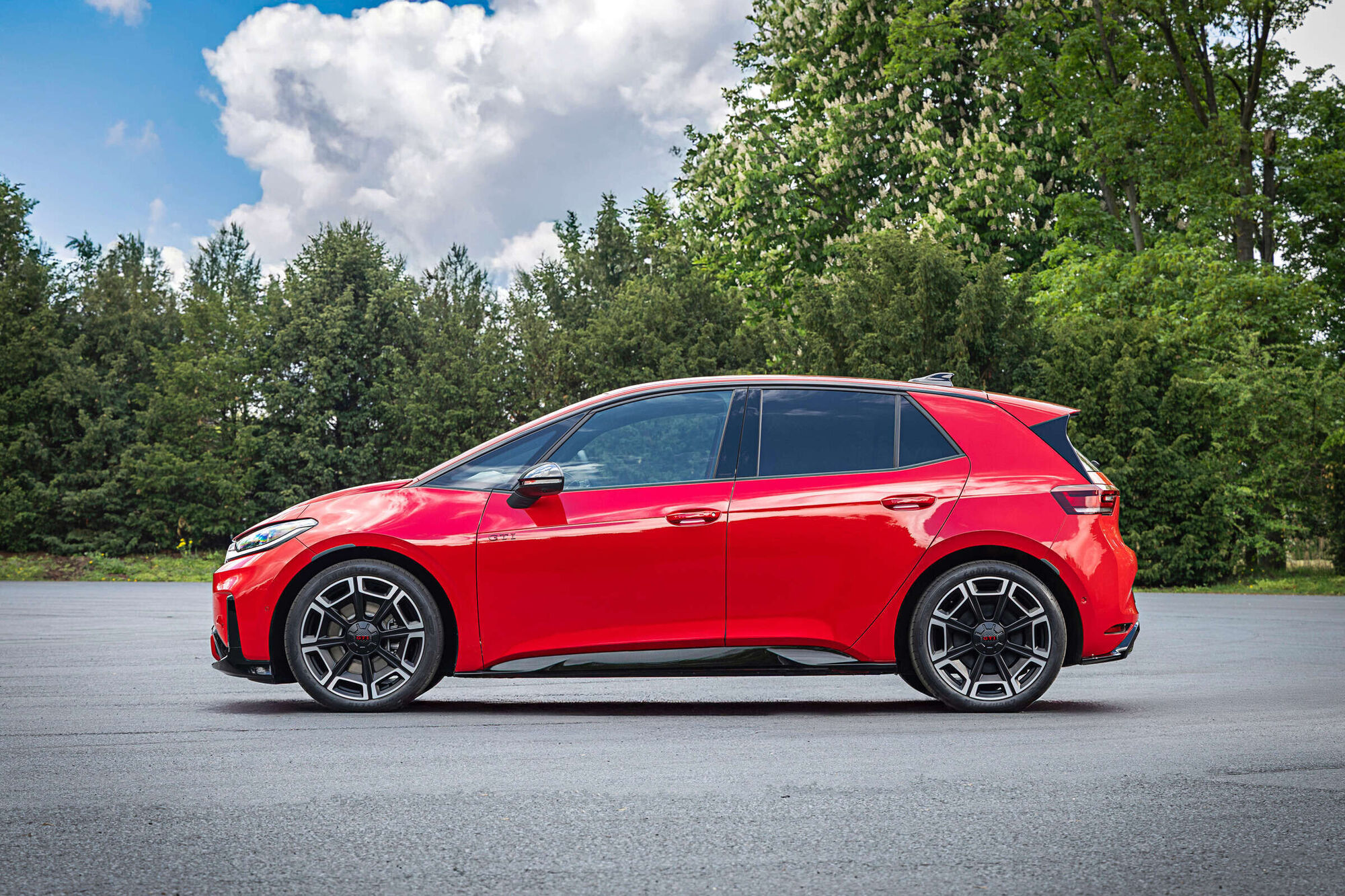
For 50 years, the letters GTI have been attached to a combustion engine. However, Volkswagen has now changed that.
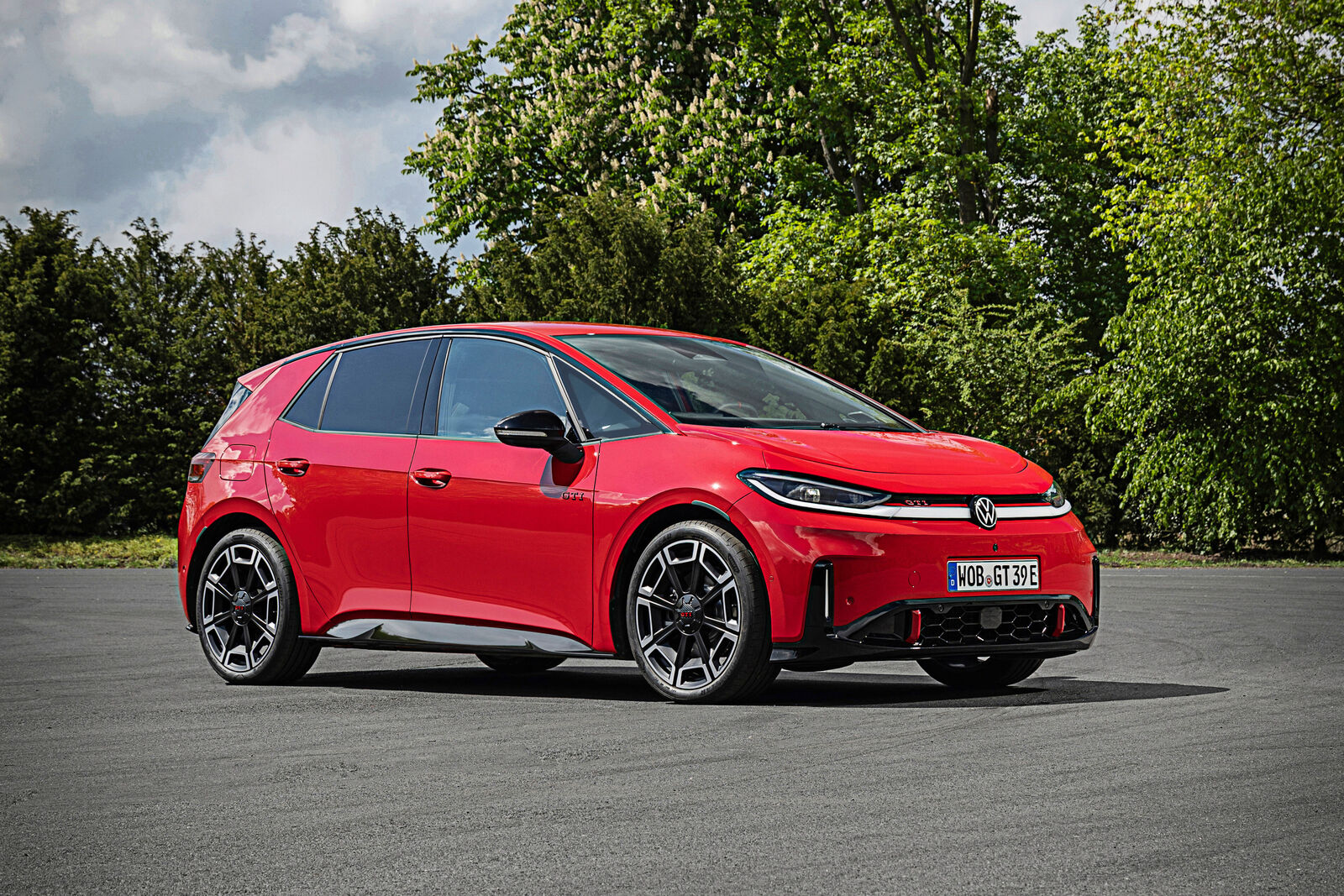
The production ID.3 GTI has been revealed with 326 PS, rear-wheel drive and up to 601 km of range, creating a comparison that would have sounded ridiculous not long ago.
Electric GTI versus Golf GTI. So which one actually has the better numbers?
Let’s start with power.
The regular Golf GTI produces 265 PS and 370 Nm from its 2.0-liter turbocharged four-cylinder engine. Power goes through a seven-speed DSG to the front wheels.
Volkswagen quotes 0-100 km/h in 5.9 seconds. The new ID.3 GTI sends 326 PS and 545 Nm to the rear axle and reaches 100 km/h in 5.6 seconds.
So the electric car has 61 PS more, an enormous 175 Nm torque advantage and beats the conventional Golf to 100 km/h by three tenths. Not exactly a gentle introduction to electric GTI ownership.
But there’s a catch: Volkswagen also sells the Golf GTI Edition 50, which produces 325 PS and can reach 270 km/h. That’s effectively identical horsepower to the ID.3 GTI and proves the combustion platform still has plenty left to give.
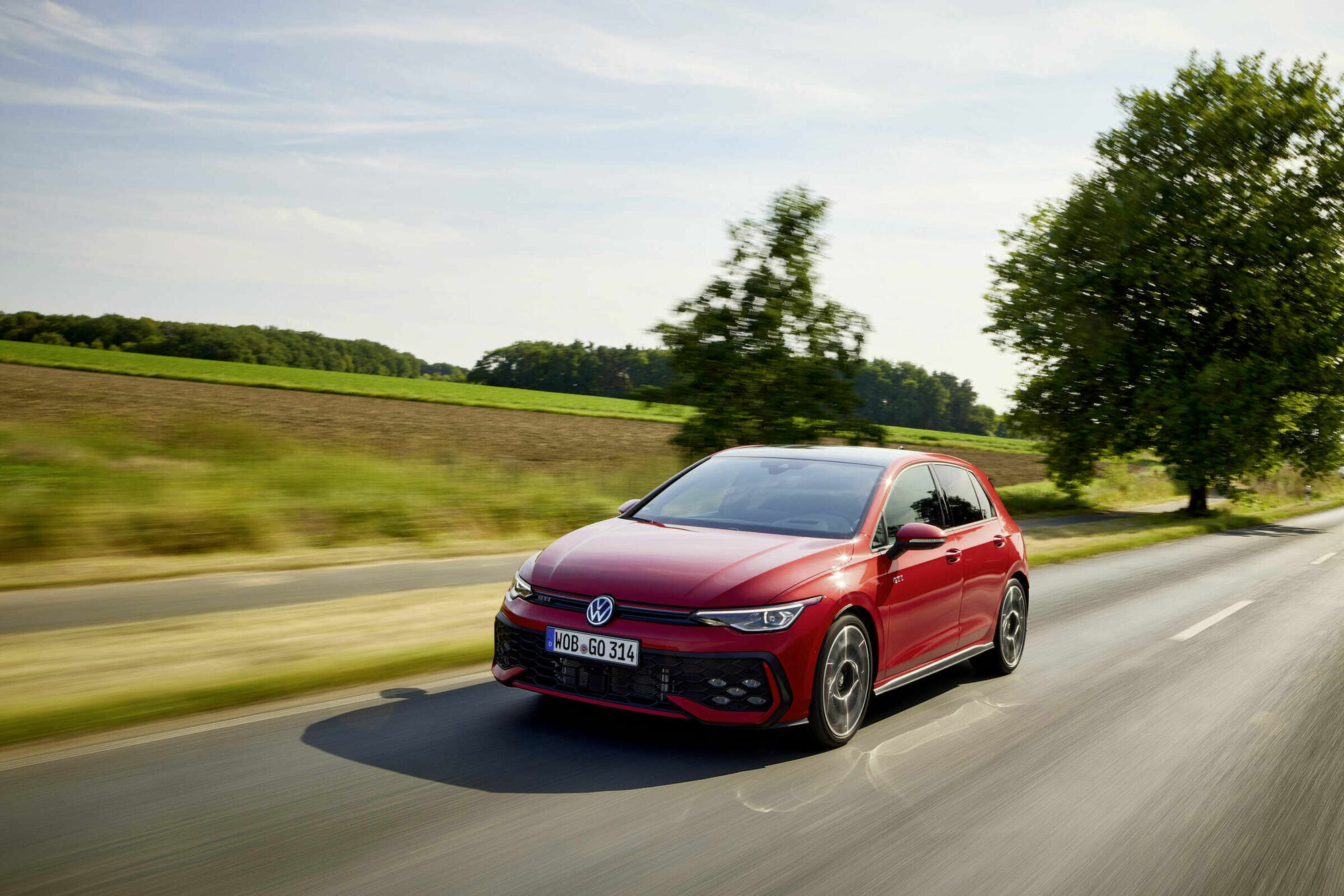
But the regular Golf is the more useful comparison because it represents the GTI most customers recognize.
The drivetrain layout may ultimately matter more than the horsepower. Traditional Golf GTIs are front-wheel drive. That’s been part of the formula since 1976. On the other hand, the ID.3 GTI is rear-wheel drive.
That alone means Volkswagen isn’t attempting to replicate the mechanical behavior of a Golf using batteries. Instead, it’s translating the idea of GTI into a platform with fundamentally different characteristics.
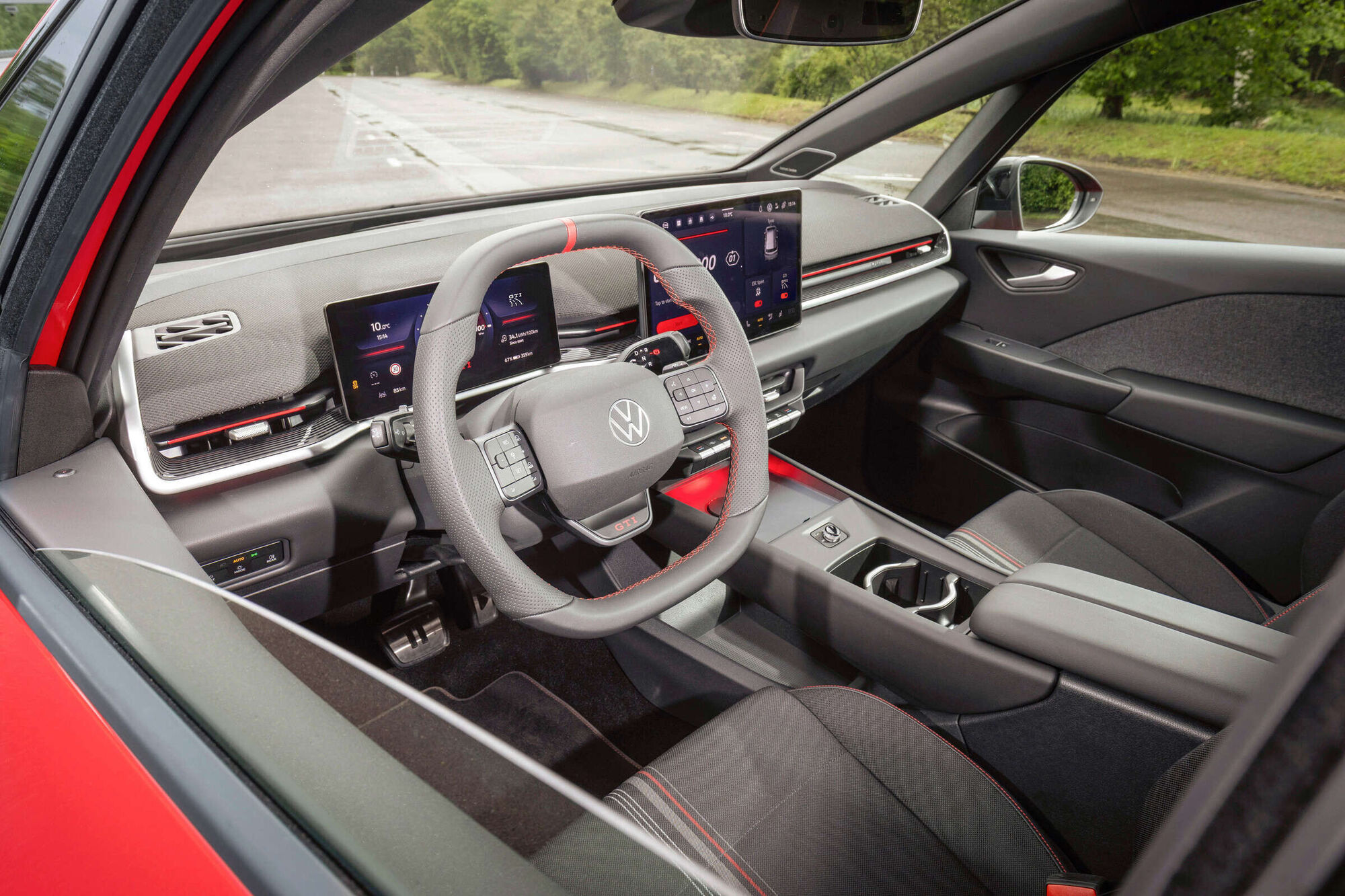
The ID.3 gets adaptive DCC suspension, progressive steering, Launch Control and a dedicated GTI driving mode. Volkswagen has also worked surprisingly hard on the visual references.
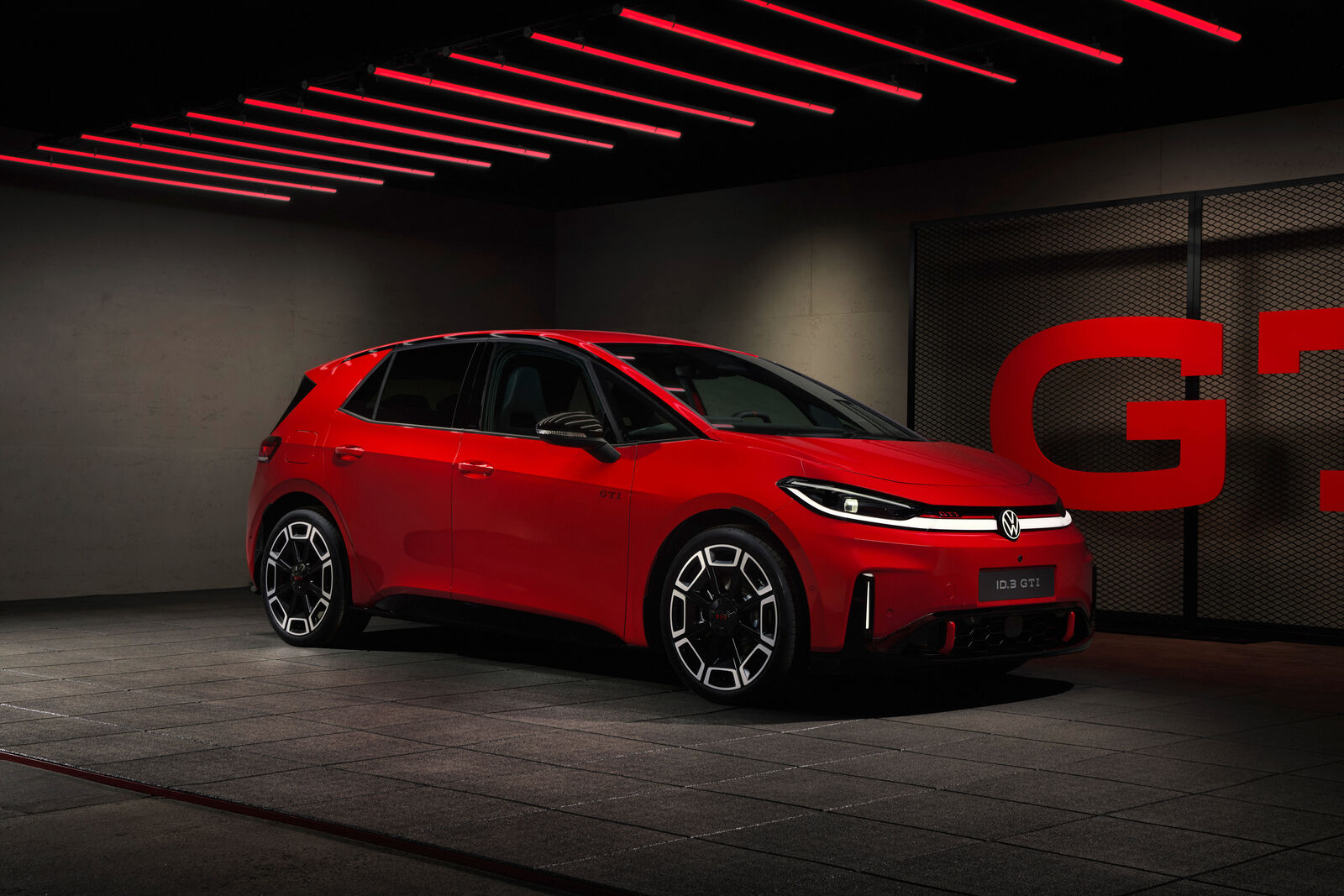
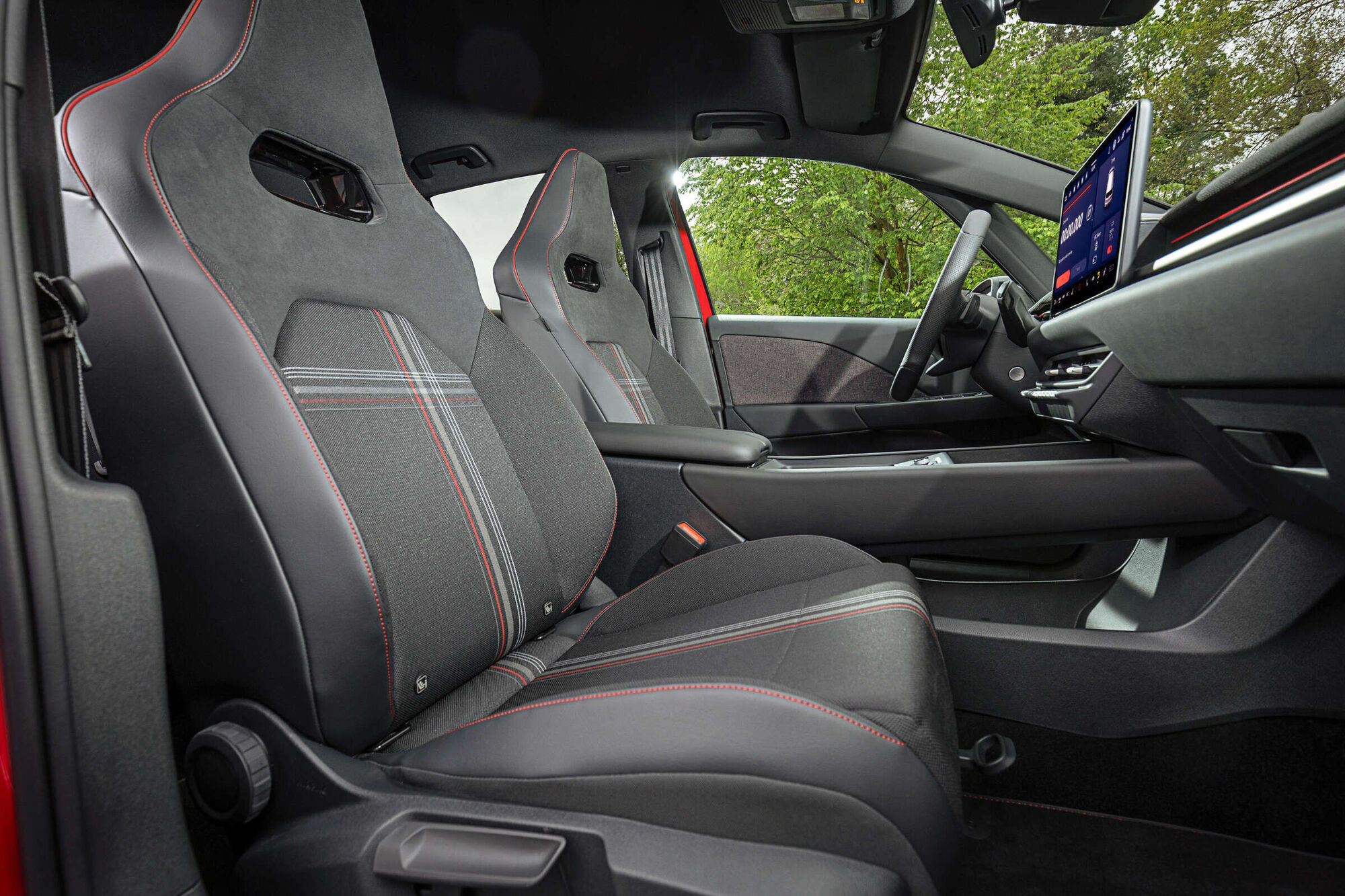
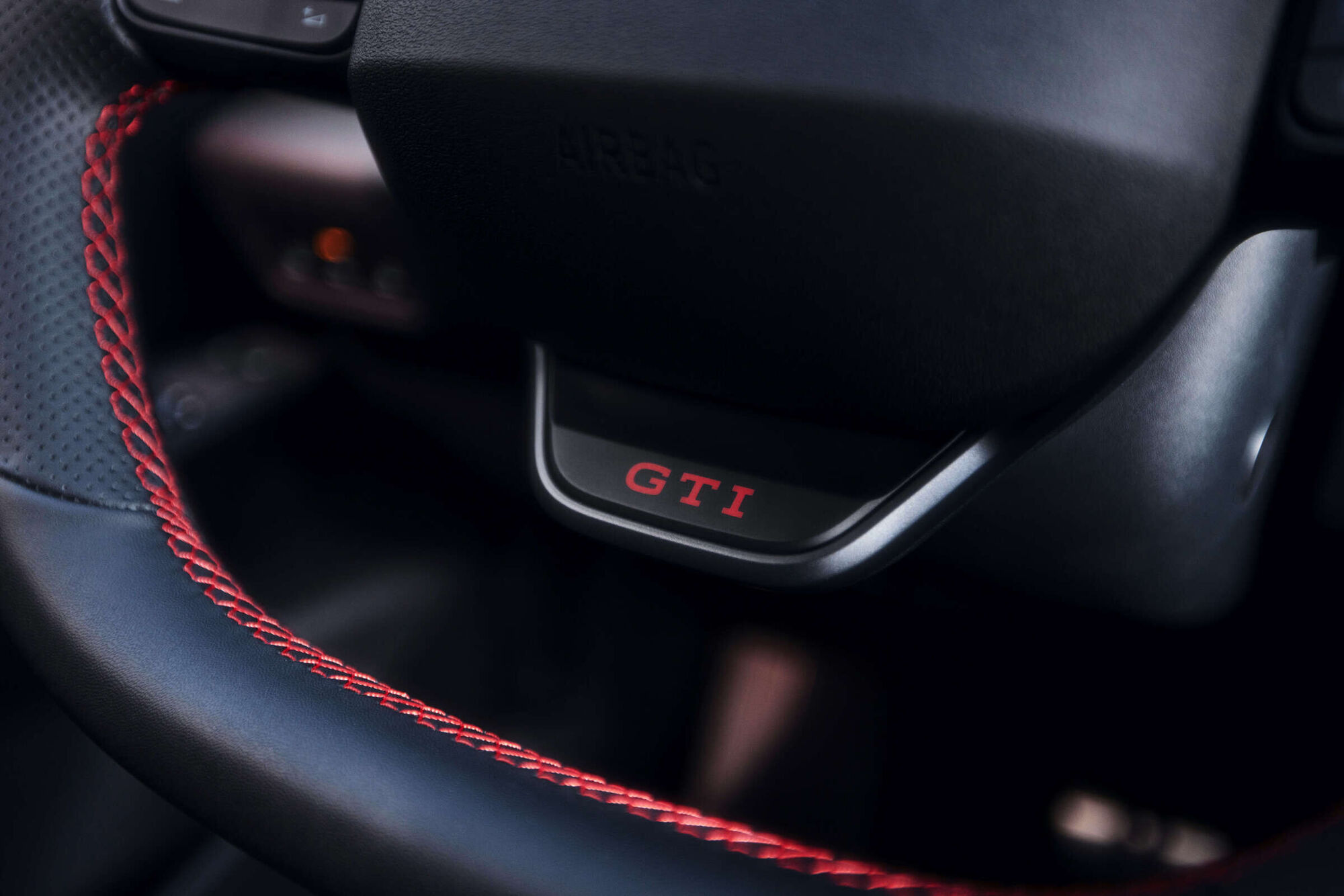
There’s the familiar red strip across the front, GTI badging, 20-inch Wörthersee wheels and a modern interpretation of the traditional checked upholstery inside.
Even the seats use a pattern Volkswagen calls Superclark. Subtle. Then there’s the number an electric performance car can’t avoid: range. Volkswagen is forecasting as much as 601 km for the ID.3 GTI, although final figures remain preliminary because the car is not yet on sale.
That gives the electric GTI an unusual dual personality. It has more torque than the Golf, accelerates faster and still promises enough range to function as an ordinary family hatchback.
But numbers don’t settle the argument, as a GTI has never been interesting merely because of acceleration.
The Golf’s turbo engine, DSG, relatively low weight and front-wheel-drive chassis produce sensations an EV cannot reproduce simply by generating more torque.
Likewise, the ID.3 doesn’t need to imitate an exhaust note or pretend its electric motor is a four-cylinder engine to justify itself.
That’s why Volkswagen’s decision to use the GTI badge is interesting. On paper, the ID.3 has already overtaken the regular Golf in several measurable categories:
Golf GTI: 265 PS, 370 Nm, 0-100 km/h in 5.9 seconds.
ID.3 GTI: 326 PS, 545 Nm, 0-100 km/h in 5.6 seconds.
The difficult part comes after the stopwatch stops.
Can an electric rear-wheel-drive hatchback create the same attachment that made people care about those three letters for half a century? We won’t know that from a specification sheet.
But Volkswagen has at least made sure the first electric GTI doesn’t arrive with weaker numbers than the car whose badge it’s borrowing.
And that was probably essential.